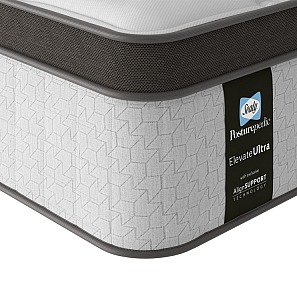
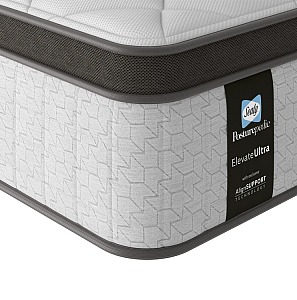
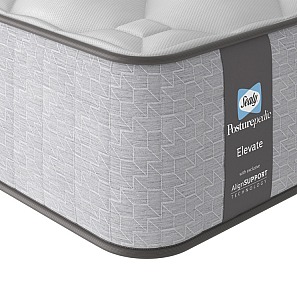
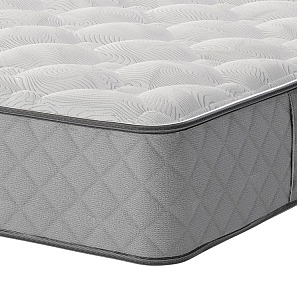
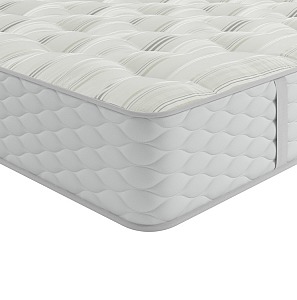
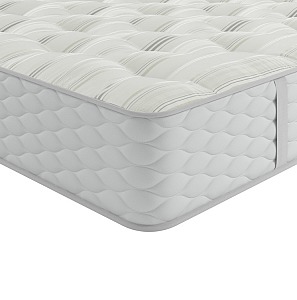
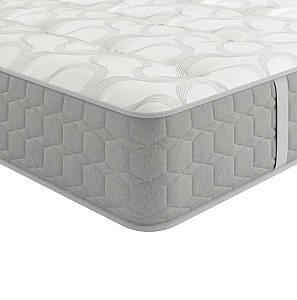
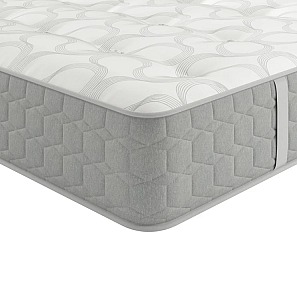
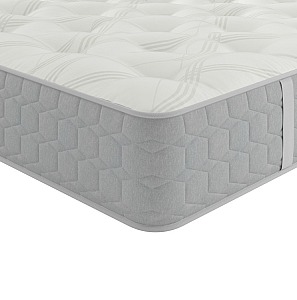
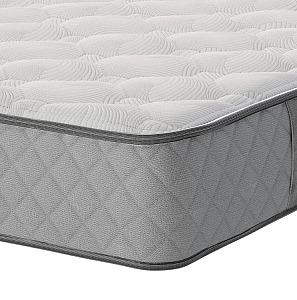
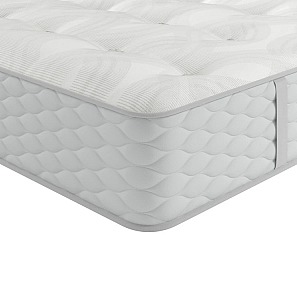
An open coil mattress is built on one connected unit of steel springs, which gives a firm, even, slightly bouncy feel at a lower price than most other spring types. This range runs from simple 325-spring mattresses for guest rooms and kids' beds, through memory foam open coil models, to hand-tufted Sealy orthopaedic and Posturepedic mattresses for back and front sleepers.
Want each spring to move on its own, with less partner disturbance? Compare our pocket sprung mattresses. On a tight budget, the cheap mattresses page has more low-cost picks.
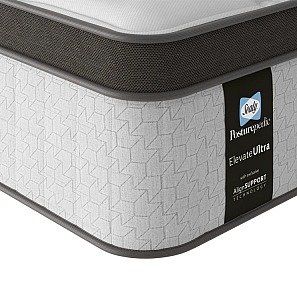
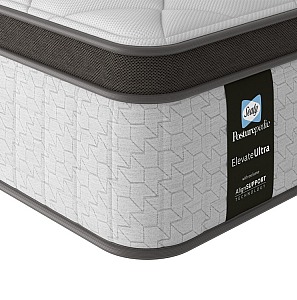
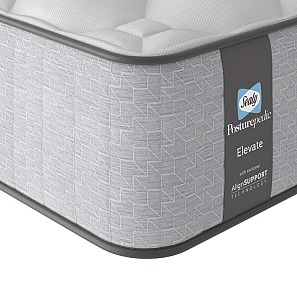
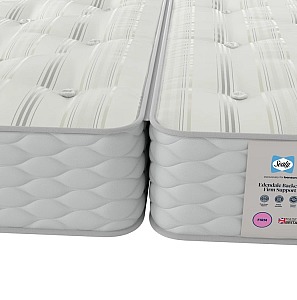
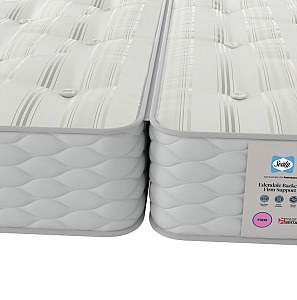
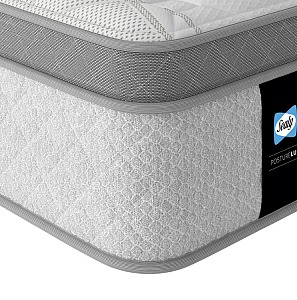
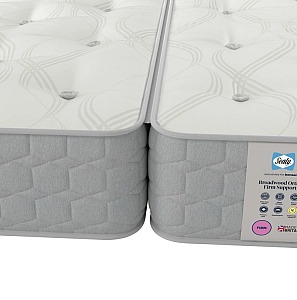
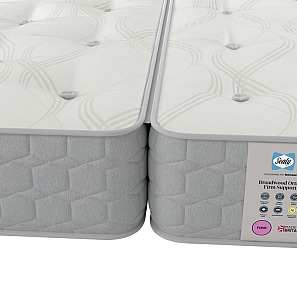
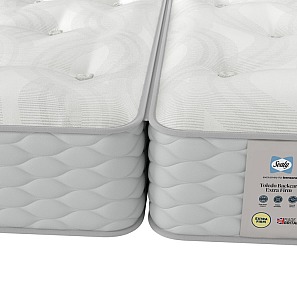
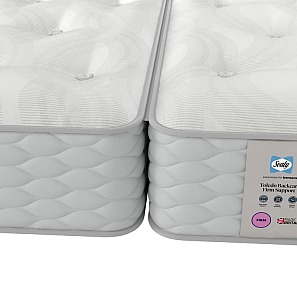
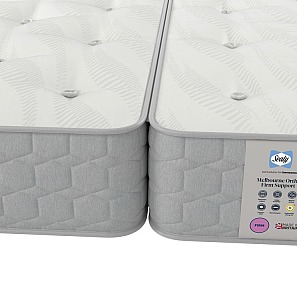
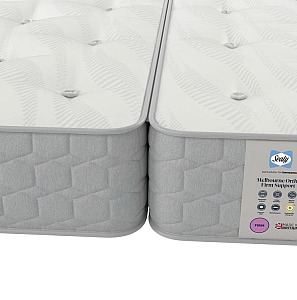
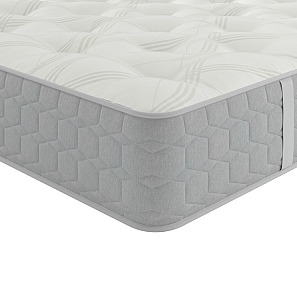
An open coil mattress, also called a standard sprung, traditional sprung or Bonnell spring mattress, has a single spring unit at its core. Hundreds of hourglass-shaped steel coils are joined together by thin helical wires and held inside a wire rod frame round the edge. Because the springs are linked, pressing on one pulls on its neighbours, so your body weight is spread across a wide area of the bed.
On top of the spring unit sit the comfort layers: fibre fillings and a quilted or tufted cover on a basic model, or memory foam, wool or latex on the deeper ones. Those layers decide how soft the bed feels; the springs decide how much support you get underneath.
This design has been around for more than a century, and it's still one of the most popular mattress types in the UK because it's simple, light and good value.
The big question most buyers have is whether to pay more for a pocket sprung mattress. In a pocket spring mattress, every spring sits in its own fabric pocket and moves on its own. In an open coil spring mattress, the springs are wired together and move as one.
Between the two sits continuous coil, such as Silentnight's Miracoil, where one long wire is wound into springs that run head to toe. It's a variation on the same connected idea rather than a pocket system.
This table sums up all 39 mattresses here by construction. The figures come from each product's own specification. Prices change every day and depend on the size you pick, so use the cards above for today's price.
| Type | On this page | Firmness (1-10) | Depth | Spring unit | Guarantee | Typical starting price | Best for |
|---|---|---|---|---|---|---|---|
| Basic open coil, no foam | 4 | 5 to 8 | Not stated | 325 springs in a steel frame | 5 years | £100 to £210 | Guest rooms, kids' beds, tight budgets |
| Memory foam open coil | 7 | 3 to 5 | 22cm | Deep open coil unit, reinforced edge | 5 years (refurbished: 1 year) | £165 to £440 | Side sleepers and lighter sleepers who want a softer top |
| Sealy Ortho and Backcare | 18 | 8 to 10 | 27cm | PostureTech Core Support, EdgeGuard | 5 years | £350 to £830 (zip and link £740 to £1,750) | Back and front sleepers, heavier sleepers, back pain |
| Sealy Advantage and PostureLux | 4 | 5 to 6 | 27 to 29cm | PostureTech CoreSupport (Plus) | 5 years | £600 to £920 | Side and combination sleepers who want springs plus foam, wool or latex |
| Sealy Posturepedic | 6 | 6 to 8 | 27 to 33cm | Twice tempered AlignSupport, UniCased edge | 10 years | £1,350 to £2,100 (zip and link £2,350 to £3,700) | Couples and anyone wanting a deep, long-lasting spring mattress |
Every mattress here has a firmness rating from 1 (softest) to 10 (firmest), where the product page gives one. Here's how the range splits:
As a rough guide, back and front sleepers usually get on best with a firm open coil at 7 to 9, and heavier sleepers can go to 10. Side sleepers need some give at the shoulder and hip, so a medium or soft open coil with a memory foam layer is the better place to start. If you want more choice at the firm end, see our firm mattresses and extra firm mattresses collections.
The simplest traditional open coil models have a 325-spring unit inside a steel frame, a layer of fibre and a damask cover, with no foam at all. They're light, breathable and cheap, which makes them a popular choice for a guest room, a kids' bed or a rental. Expect a lively, bouncy feel. Many have a British Kitemark and are rotate-only, so you turn them head to foot rather than flipping them.
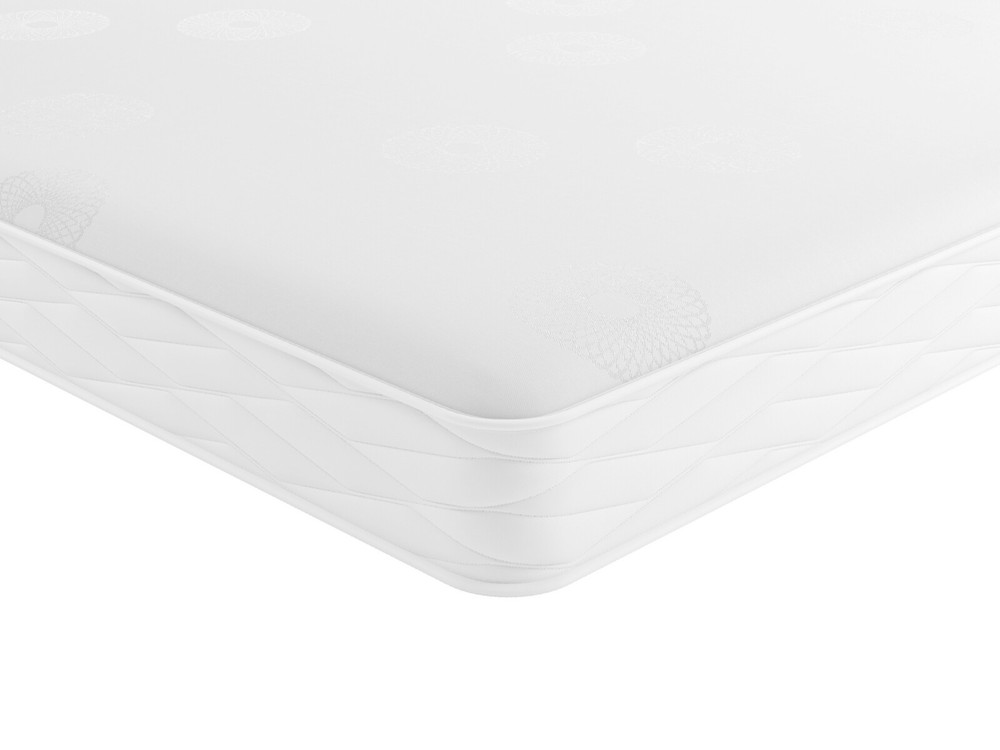
A memory foam open coil design puts a layer of memory foam over a deep spring unit. The foam softens with body heat and lets the shoulder and hip sink in a little, while the springs underneath stop you dropping too far. That combination suits side sleepers and lighter people far better than a plain spring unit, and it keeps the price well below most memory foam mattresses or hybrids. The 22cm models here also add reinforced edges and a Pro-bio treated cover.
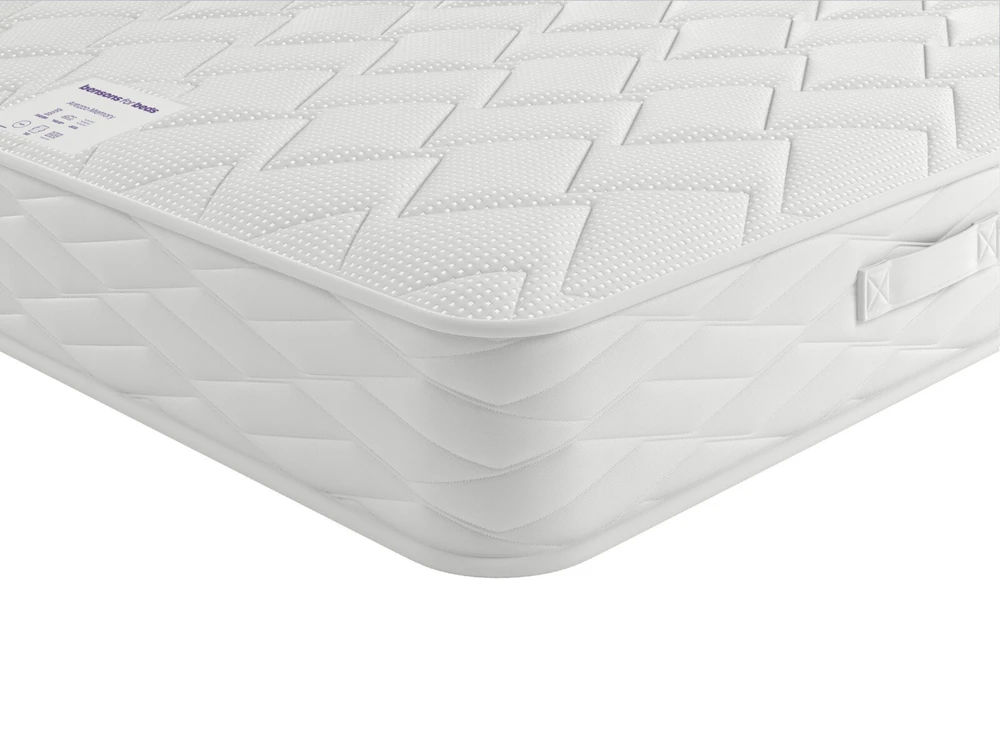
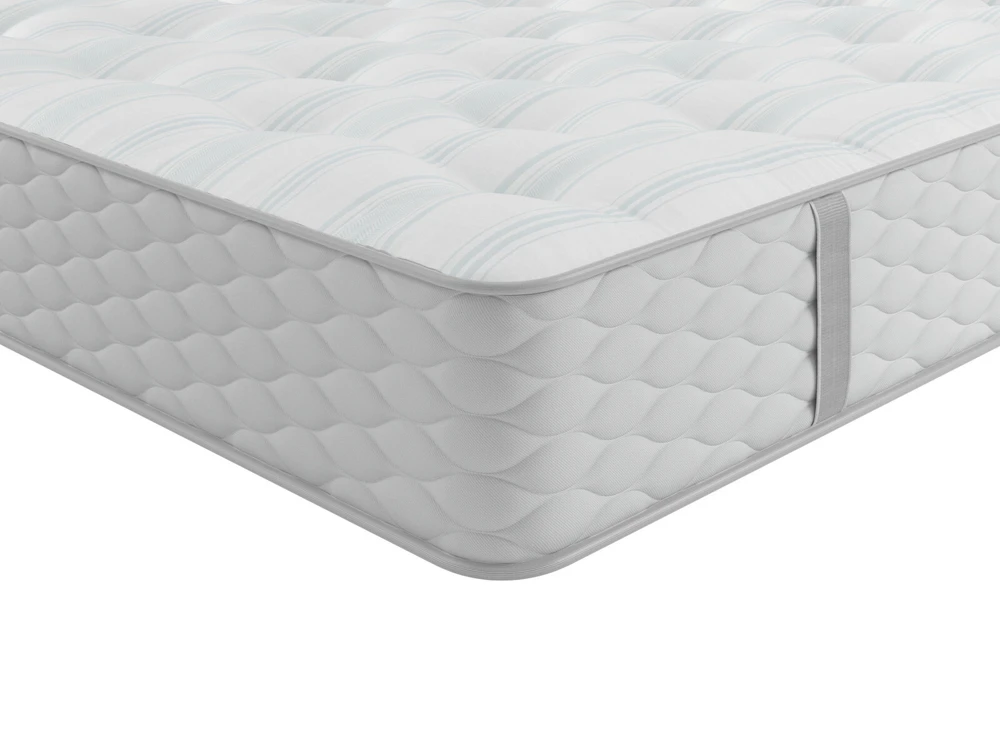
Most of this page is made up of Sealy Ortho and Backcare mattresses. They use Sealy's PostureTech Core Support spring unit, which starts gentle and gets firmer the harder you press. The Ortho models add a central PowerPack zone of extra support under the hips and lower back, and some use twice tempered springs, a heat treatment that helps the steel hold its shape. Every one is hand tufted, which pins the fillings so they don't shift, and has EdgeGuard sides so you can sit or sleep near the edge. If you're shopping for an orthopaedic mattress, these give the firm, flat feel orthopaedic usually means.
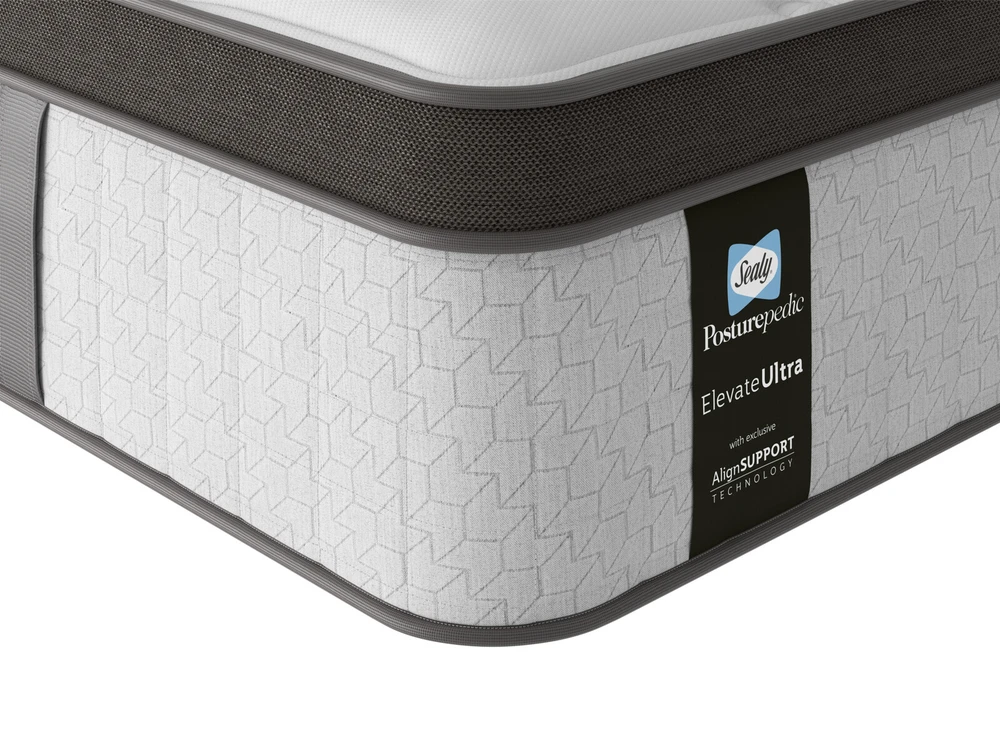
At the top of the range, the Sealy Newton, Bronte and Orwell use the AlignSupport spring, a two-stage coil that first follows your shape and then adds deeper support. The unit is twice tempered, sits on a BasePlank foundation and is locked into UniCased edges. Above it is a ComfortCore of latex or MemorySense foam in the middle third, then latex or Sealy foam on top. They're 27 to 33cm deep, no-turn and come with a 10-year guarantee. Sealy's own site explains its spring systems in more detail.
It can be, if it's the right one. A spring mattress helps when it's firm enough to keep your spine level and not so hard that your hips and shoulders take all the pressure. That's why the open coil spring sits inside so many orthopaedic mattresses. The PowerPack in the Sealy Ortho range is there for exactly this, adding support where the lower back needs it most.
A firm mattress isn't a cure, though. The NHS advice on back pain puts staying active first, so pick the firmness that keeps you comfortable in your usual sleeping position. Our mattresses for back pain page compares more supportive options, including pocket sprung and hybrid models.
A plain firm spring mattress isn't ideal for side sleepers. With a thin filling on top, the shoulder and hip can't sink in, and pressure builds up at those points. Side sleepers will get on much better with:
Because the springs are linked, couples feel more movement on an open coil spring mattress than on pocket springs. If one of you is a restless sleeper, that's worth knowing. The answer here is zip and link: 11 of the Sealy mattresses on this page come as two separate halves that zip together into one bed, so far less movement crosses from one side to the other, and the halves can be unzipped later for two single beds. See every option on our zip and link mattresses page.
A basic open coil unit usually gives around five years of good support before the springs start to soften. Deeper models with tempered springs, hand tufting and reinforced edges last longer, and the Sealy Posturepedic models carry a 10-year guarantee. The Sleep Charity has more advice on sleeping well; a common rule of thumb is to think about a new mattress after around seven years, sooner if it's sagging.
To get the most from yours:
Most mattresses here come in the standard UK sizes, from a small single for a child's bed up to a king size or super king. Choose the size from the drop-down on each product page. A double (135 x 190cm) gives each person only 67.5cm, about the width of a cot, so couples who move a lot often step up to a king size. For kids, a firm or medium open coil in a single is a sensible, affordable choice. Which?'s mattress buying guide is worth reading before you buy, and if you can, lie on a mattress in your usual position for a few minutes rather than pressing it with your hand.
Prefer one brand? All of the Sealy models are also on our Sealy mattresses page, and heavier sleepers can compare more firm options on our mattresses for heavy people page.
In open coil, the springs are wired together and move as one unit. In a pocket sprung mattress each spring has its own fabric pocket and moves on its own, so it follows your shape more closely and passes on less movement from your partner. Open coil is usually firmer, lighter and cheaper.
Yes, for the right sleeper. They give firm, even support, breathe well and cost less. They suit back and front sleepers, guest rooms and kids' beds. Side sleepers should choose one with a memory foam or latex comfort layer.
Most feel firm, but the comfort layers make a big difference. On this page, firmness runs from 3 (soft memory foam open coil models) to 10 (the Sealy Edendale Backcare Extra Firm Zip and Link).
Bonnell is another name for open coil. Bonnell springs are the hourglass-shaped coils joined by helical wires that make up a traditional open coil unit.
All of the mattresses on this page are rotate-only or no-turn. Rotating one head to foot every few months helps it wear evenly. Older double-sided spring mattresses needed flipping too.
Yes. A firm or medium open coil gives a growing child even support, it's light enough to move, and at the lower end of the range it's easy to replace as they grow. Look for a breathable cover and a British Kitemark.