
Strip the bed a year after buying a mattress and there is often a shallow hollow where you sleep. For side sleepers it sits under one hip. It is the most common complaint about new mattresses, and the most common reason guarantee claims are turned down.
Why side sleepers get the dip first
On your side, your pelvis is the heaviest point resting on the smallest area. One estimate puts it at around three quarters of your body weight pressing through a patch roughly the size of your hand. The comfort layers under that patch compress more than anywhere else.
Back sleepers spread their weight across the whole torso. Side sleepers concentrate it. So the same mattress settles faster, and more visibly, under a side sleeper.
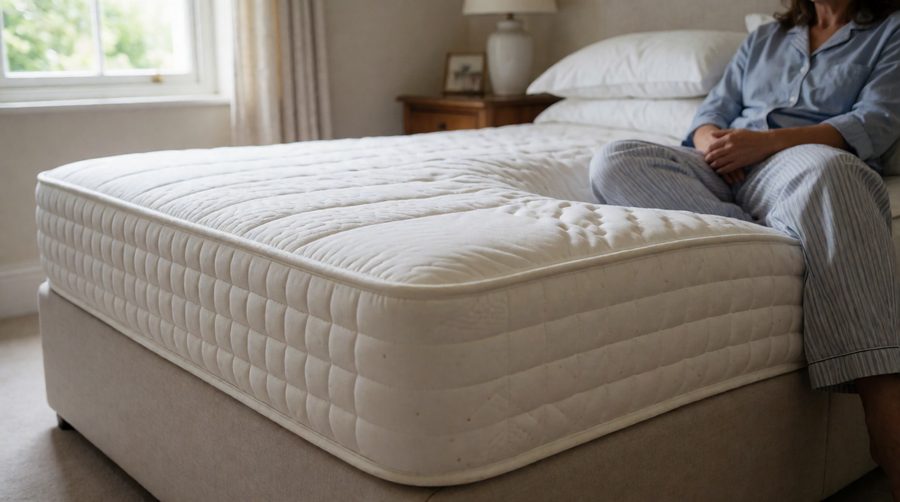
Normal settling or a fault?
Settling is the comfort layers bedding in to your shape. Every mattress does it, and most happens in the first few months. It is not covered by any guarantee.
A fault is a dip deeper than the limit in your guarantee terms, measured with nobody on the mattress. Limits vary, but these are typical:
| Dip depth (no weight on it) | What it usually means | Claimable? |
|---|---|---|
| Under 15mm | Normal bedding in of comfort layers | No |
| 15–25mm | Noticeable settling. Rotate more often | Rarely |
| 25mm+ in year one | Beyond normal for some makers | Possibly – check your terms |
| 38mm (1.5in)+ | The common UK limit for sprung mattresses | Often |
| 40mm at 3 years, 50mm at 5 | Sliding limits some makers use as the mattress ages | Depends on age |
Swipe the table sideways to see every column.
The key words in most guarantees are “with no weight on the mattress”. A dip that feels deep when you lie in it may measure far less once you get up. That is the reason many claims fail.
How to measure a dip properly
- Strip the bed completely, including the protector and any topper.
- Leave the mattress for a few hours with nobody on it, so the foam recovers.
- Lay a long straight edge across the dip, edge to edge. A spirit level or a taut piece of string works.
- Measure from the underside of the straight edge to the lowest point of the dip.
- Photograph the ruler in place, close up and from the side, with the reading clear.
What voids a guarantee
Before you claim, check you have not broken one of the conditions. These are the usual reasons claims are refused:
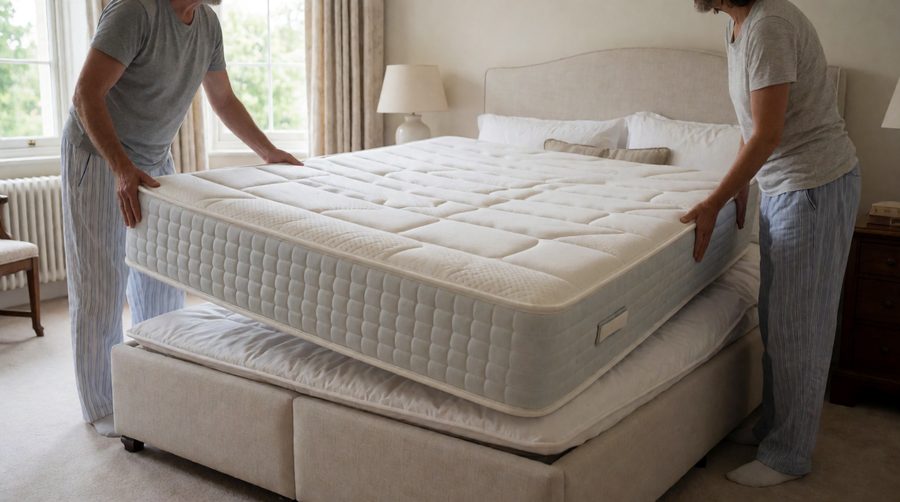
- No rotating or turning. Most guarantees require it. No-turn mattresses still need rotating head to foot.
- Stains. Almost every guarantee is void on a stained mattress. Use a protector from day one.
- The wrong base. Slats spaced too far apart, or a sagging old divan, can cause dips that are not the mattress's fault.
- Weight limits. Some makers set a limit per sleeping side. One premium maker caps its guarantee at 18 stone per side.
- No proof of purchase. Keep the receipt for the full guarantee period.
Rotate or turn — and how often
Every mattress we list says whether it is no-turn or turnable. They are cared for differently:
| Type | What to do | How often |
|---|---|---|
| No-turn | Rotate head to foot. Never flip | Monthly for the first 3 months, then every 3–6 months |
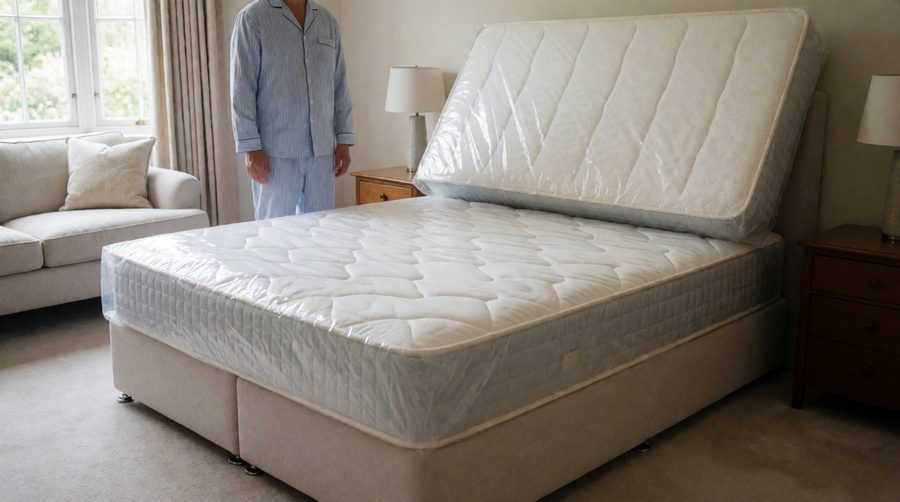
| Seasonal turn | Rotate and flip over | With each season, four times a year |
| Zip and link | Rotate each half. Swap sides if you sleep apart | Every 3–6 months |
Swipe the table sideways to see every column.
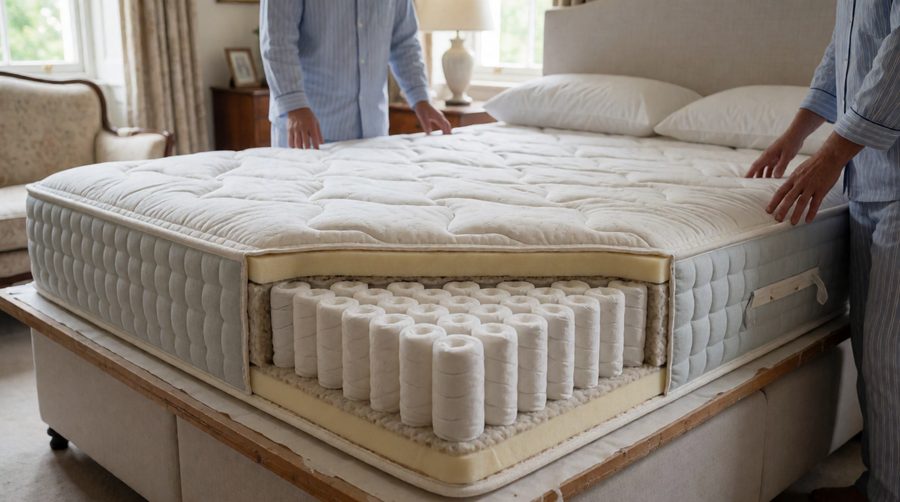
Turnable mattresses, often the natural ones with wool and latex, spread wear over both faces. Side sleepers who worry about dips should consider one. Our guide to what spring counts really mean explains why the comfort layers, not the springs, usually settle first.
Shift your spot. Most side sleepers lie in exactly the same place every night. Moving a few centimetres up or down the bed now and then spreads the load and slows the dip.
Dip in the first few weeks?
If a mattress dips badly within 40 nights, that is a comfort problem as much as a durability one. The comfort trial is quicker than a guarantee claim. Our guide to the 40-night comfort trial explains the fees and timing.
And if the dip is leaving you with a sore hip or a numb arm, the mattress may simply have been too soft for your build. See our firmness by body weight table.
Key points
- Side sleepers get dips under the hip first, because that is where weight concentrates.
- Shallow settling is normal and not covered by any guarantee.
- Claims are judged on dip depth with no weight on the mattress – often 25–38mm or more.
- Measure with a straight edge on a stripped, rested mattress, and photograph it.
- Skipping rotation, stains, a poor base or weight limits can void the guarantee.
- Rotate no-turn mattresses every 3–6 months, and flip seasonal-turn ones four times a year.
Sources
Read next
Ready to compare?
Filter every mattress we list by firmness, size, depth, springs, cooling and guarantee — ranked for side sleepers.
Use the mattress finder